
Why Sleep Hygiene Alone Sometimes Isn’t Enough
If you’ve struggled with insomnia, you’ve probably received plenty of advice about how to sleep better.
Avoid caffeine.
Put away screens before bed.
Keep your bedroom cool and dark.
Stick to a consistent sleep schedule.
Try relaxation exercises.
Practice better sleep hygiene.
These recommendations are well-intentioned, and supported by research. Good sleep habits absolutely support healthy sleep.
The problem is that many people with chronic insomnia have already tried them.
They’ve read the articles, bought the blackout curtains, downloaded the sleep apps, stopped drinking caffeine, and carefully followed the advice they’ve been given. Yet they still find themselves lying awake at night wondering why nothing seems to work.
This is one reason many sleep specialists consider Cognitive Behavioral Therapy for Insomnia (CBT-I), not sleep hygiene, to be the first-line treatment for chronic insomnia.
What’s Sleep Hygiene?
Sleep hygiene refers to habits and environmental factors that support healthy sleep. Examples include maintaining a consistent sleep schedule, limiting caffeine later in the day, creating a comfortable sleep environment, exercising regularly, limiting alcohol before bedtime, and reducing activities that may interfere with sleep.
These habits can help support healthy sleep and are often a reasonable place to start when sleep problems first develop. The difficulty is that chronic insomnia is often maintained by factors that sleep hygiene alone doesn’t address.
Why Sleep Hygiene Sometimes Falls Short
One of the biggest misconceptions about insomnia is the idea that people aren’t sleeping because they haven’t learned the right habits.
In reality, many people with chronic insomnia already know what they are “supposed” to do. The problem isn’t a lack of information. The problem is that chronic insomnia often becomes self-sustaining.
Many cases of insomnia begin during a period of stress, illness, travel, anxiety, or major life change. Although the original trigger may resolve, the struggle with sleep can continue.
Over time, people may begin spending more time in bed, worrying about sleep, monitoring how much sleep they’re getting, trying harder to fall asleep, or becoming increasingly frustrated when sleep doesn’t come. These reactions are understandable, but they can unintentionally keep insomnia going.
When the Struggle to Sleep Becomes Part of the Problem
When people can’t sleep, they naturally focus more attention on sleep. They may start checking the clock repeatedly, monitoring how sleepy they feel, calculating how many hours remain before morning, or worrying about how they will function the next day. The more important sleep becomes, the harder it can be to stop thinking about it.
Many people begin treating bedtime as a performance test. Every night becomes an opportunity to determine whether they will sleep well enough, feel rested enough, or function adequately the next day. Unfortunately, this heightened attention tends to increase alertness rather than promote sleep.
Sleep Isn’t Something You Can Force
Most things improve when we try harder. But sleep is different. The harder people try to make sleep happen, the more focused they often become on the fact that they are still awake.
People may find themselves checking whether they feel sleepy enough, evaluating whether they are falling asleep quickly enough, or trying to control a process that is largely automatic.
This creates a frustrating paradox: the effort to force sleep can become part of what keeps sleep from happening.
What’s CBT-I?
Cognitive Behavioral Therapy for Insomnia (CBT-I) is an evidence-based treatment specifically designed for chronic insomnia.
Unlike sleep hygiene, CBT-I doesn’t simply focus on healthy sleep habits. It focuses on the behaviors, thought patterns, and sleep-related habits that can keep insomnia going over time.
CBT-I is considered the first-line treatment for chronic insomnia by major sleep and medical organizations and has been shown to produce lasting improvements in sleep for many people.
Rather than teaching people how to “sleep harder,” CBT-I helps them change the patterns that can unintentionally strengthen insomnia.
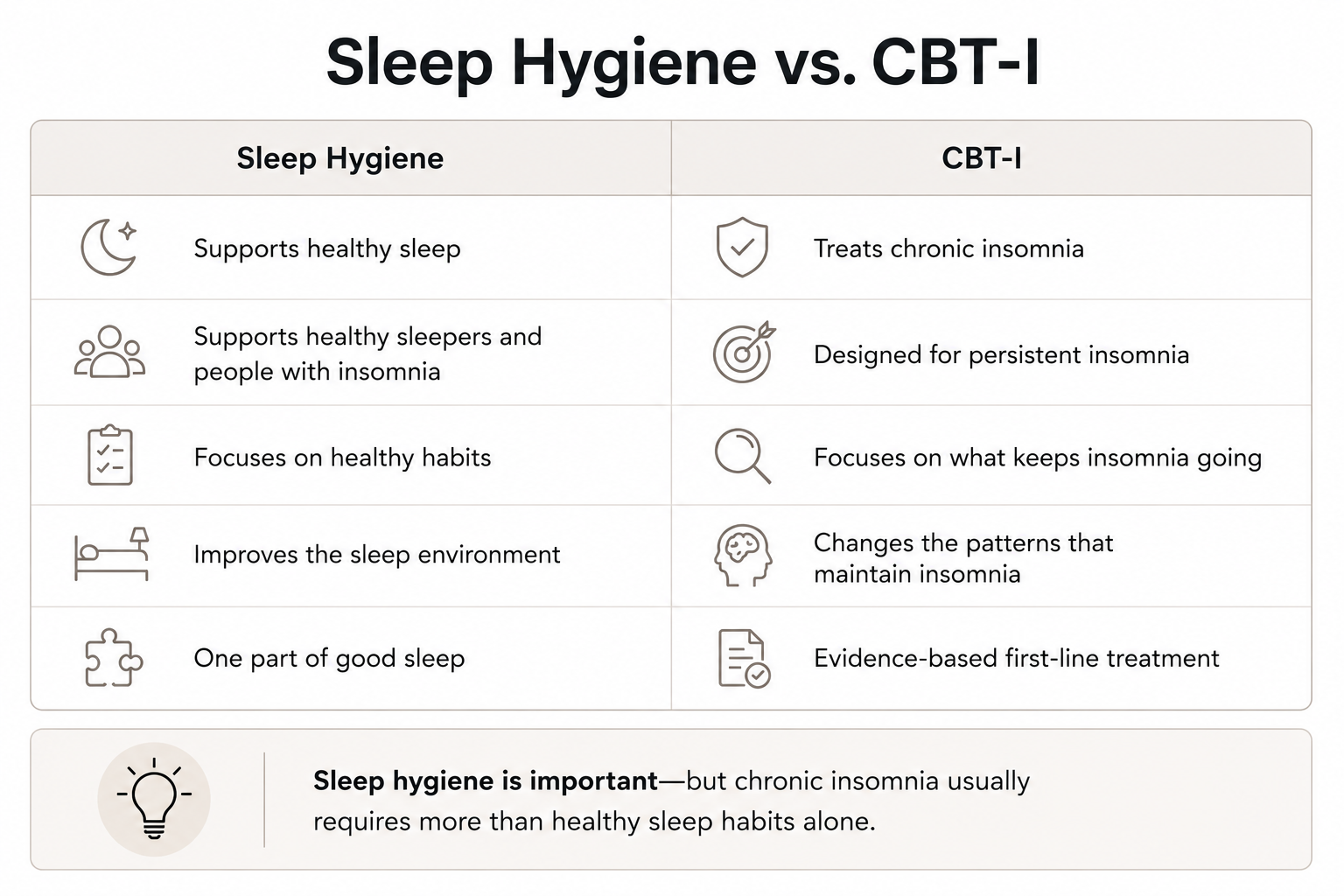
How CBT-I Differs From Sleep Hygiene
Cognitive Behavioral Therapy for Insomnia focuses on the factors that maintain chronic insomnia rather than simply teaching healthy sleep habits. Treatment often includes strengthening sleep drive, improving the connection between the bed and sleep, reducing sleep-related anxiety, changing behaviors that unintentionally reinforce wakefulness, decreasing excessive monitoring of sleep, and developing more realistic expectations about sleep. These interventions target the patterns that often keep insomnia going long after the original trigger has passed.
Sleep Hygiene Still Matters
None of this means sleep hygiene is unimportant. Healthy sleep habits can support good sleep and may be sufficient for people experiencing occasional sleep difficulties
The problem is that sleep hygiene is often presented as a complete solution for chronic insomnia when it is only one piece of the puzzle.Telling someone with longstanding insomnia to avoid screens before bed may be helpful advice, but it is unlikely to address the factors that are maintaining chronic insomnia by itself.
Why People Often Feel Frustrated
Many people seek CBT-I after spending months or years trying to improve their sleep through better habits, supplements, relaxation exercises, apps, or sleep hygiene recommendations. When those approaches don’t work, they often conclude that they are doing something wrong or that their sleep problem is unusually severe. In reality, they may simply be using strategies that were never designed to address the mechanisms that maintain chronic insomnia.
The Goal Isn’t Perfect Sleep
No one sleeps well every night.
The goal of treatment isn’t to eliminate every restless night or guarantee perfect sleep.The goal is to reduce the struggle with sleep, improve consistency, and help people feel less trapped by insomnia.Over time, many people find that sleep becomes less effortful and occupies less space in their daily lives.
CBT-I for Insomnia in Arlington, VA
I provide Cognitive Behavioral Therapy for Insomnia (CBT-I) in Arlington for adults experiencing chronic insomnia, difficulty falling asleep, nighttime awakenings, sleep anxiety, and related concerns. Services are available in person and through teletherapy.
Treatment focuses on helping people break out of chronic insomnia patterns, reduce anxiety around sleep, and build healthier, more sustainable sleep habits over time.
If you’ve started worrying about sleep long before your head hits the pillow, CBT-I may help. Reach out to learn more.
Related Articles
What Is CBT-I (Cognitive Behavioral Therapy for Insomnia)?
Why CBT-I Often Produces More Lasting Improvement Than Sleep Medication