
Why Can I Sleep on Vacation But Not at Home?
At home, you toss and turn for hours. You watch the clock, dread another sleepless night, and wake up feeling exhausted. Then you go on vacation, stay in an unfamiliar hotel room, and suddenly sleep better than you have in months.
Many people expect the opposite. They assume they’ll sleep worse in a different bed, with unfamiliar sounds and surroundings. Instead, they’re left wondering:
If I can sleep on vacation, why can’t I sleep at home?
Is there something wrong with my bedroom?
Have I somehow forgotten how to sleep?
Many people take this as evidence that something is “wrong” with their ability to sleep. In reality, sleeping well in another environment is often an encouraging sign that the brain hasn’t lost the ability to sleep. Instead, it suggests that something about the home sleep environment or the habits and expectations surrounding it may be helping to maintain the insomnia.
Home Can Become Associated With Wakefulness
When insomnia first develops, people often assume it’s temporary. They stay in bed hoping sleep will eventually come.
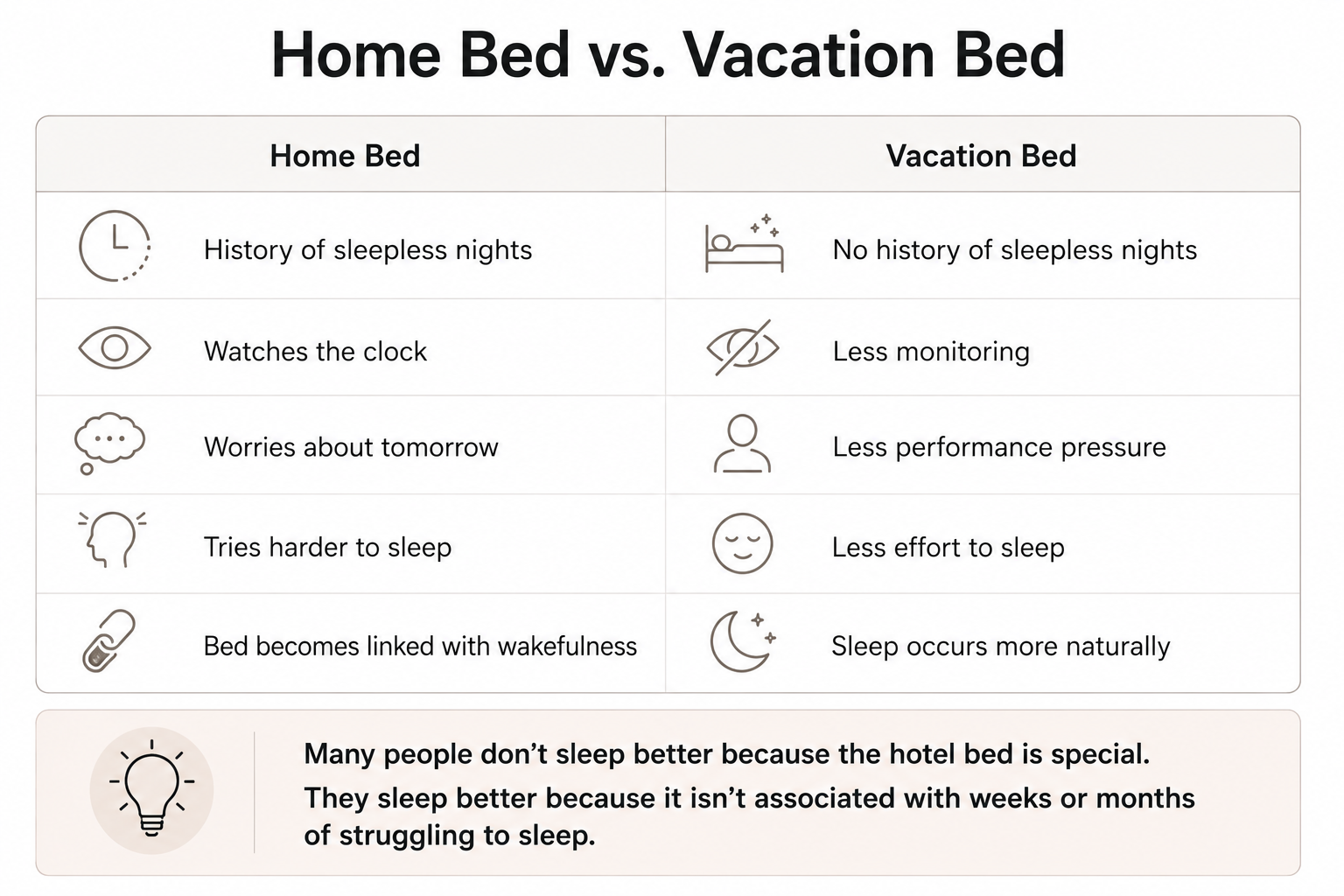
As the nights accumulate, however, the bed can begin to take on a different meaning. Instead of being a place associated primarily with sleep, it becomes the place where someone lies awake, watches the clock, worries about tomorrow, and tries harder and harder to fall asleep.
Over time, simply getting into bed may trigger alertness rather than drowsiness. In other words, the bedroom itself can become a cue for wakefulness instead of sleep. This process is known as conditioned arousal and is one of the key factors that maintains chronic insomnia.
Vacation Changes More Than Your Location
Many people assume they sleep better because they’re more relaxed on vacation. Relaxation may play a role, but it usually isn’t the whole story. Some people notice the same pattern in hotels, guest rooms, or other unfamiliar places, even when they aren’t especially relaxed.
Vacation often changes many of the habits, routines, and expectations that have become associated with insomnia. A person may stop checking the time, spend less energy worrying about the next day’s responsibilities, and feel less pressure to fall asleep quickly because there isn’t an early meeting or commute waiting in the morning.
Perhaps most importantly, the hotel bed usually doesn’t have the same history of sleepless nights attached to it.
Sleep Anxiety Often Stays at Home
For many people with chronic insomnia, bedtime gradually becomes something to fear rather than look forward to.
A woman may climb into bed already wondering whether tonight will be another bad night. A man may begin calculating how many hours remain before the alarm goes off or thinking about how exhausted he’ll feel the next day.
These thoughts are understandable. After enough difficult nights, anyone would become concerned about sleep. Unfortunately, the more attention someone gives to whether sleep is happening, the more alert the brain often becomes.
Why Trying Harder Usually Doesn’t Help
People naturally respond to insomnia by trying harder to sleep.
They may go to bed earlier, stay in bed longer, monitor whether they’re feeling sleepy, or mentally coach themselves to relax. Although these strategies seem logical, they often increase the amount of attention focused on sleep itself.
Sleep is different from most activities. The harder we try to force it, the more elusive it often becomes.
Does This Mean My Insomnia Is “All in My Head”?
Not at all.
Chronic insomnia is a real sleep disorder. Sleeping better on vacation doesn’t mean the problem isn’t real or that you’re choosing to stay awake.
Instead, it suggests that the conditions maintaining insomnia may be changing. When the cycle of conditioned arousal, sleep-related anxiety, and excessive effort is interrupted, sleep sometimes occurs more naturally, even in an unfamiliar environment.
How CBT-I Helps
Cognitive Behavioral Therapy for Insomnia (CBT-I) is designed to help break the association between bed and wakefulness while reducing the habits and thought patterns that unintentionally keep insomnia going.
Treatment may involve strengthening the body’s natural drive to sleep, rebuilding the connection between bed and sleep, reducing sleep-related anxiety, and changing behaviors that reinforce wakefulness. Rather than trying to force sleep, CBT-I helps create the conditions in which sleep is more likely to occur naturally.
The goal is to help home become a place where sleep feels natural again.
CBT-I for Insomnia in Arlington, VA
I provide Cognitive Behavioral Therapy for Insomnia (CBT-I) for adults struggling with chronic insomnia, difficulty falling asleep, nighttime awakenings, sleep anxiety, and related concerns. Services are available in person in my Arlington, VA office and through teletherapy.
If you’re tired of dreading bedtime, contact me to learn how CBT-I can help.
Related Articles
What Is CBT-I (Cognitive Behavioral Therapy for Insomnia)?
Why CBT-I Often Produces More Lasting Improvement Than Sleep Medication
Why Can’t I Sleep Even When I’m Exhausted?