
Why Can’t I Sleep Even When I’m Exhausted?
One of the most frustrating experiences in insomnia is feeling completely exhausted but still being unable to sleep.
Many people assume that if they are tired enough, sleep should happen automatically. When it doesn’t, the experience can feel confusing, alarming, and deeply discouraging.
People often find themselves asking:
How can I be this tired and still be awake?
If my body needs sleep, why can’t I sleep?
Am I doing something wrong?
What’s happening to me?
The answer is that exhaustion and sleep are related, but they’re not exactly the same thing.
Sleep Requires More Than Fatigue
Most people think of sleep as a simple equation:
More tired = more sleep.
In reality, sleep is influenced by multiple systems.
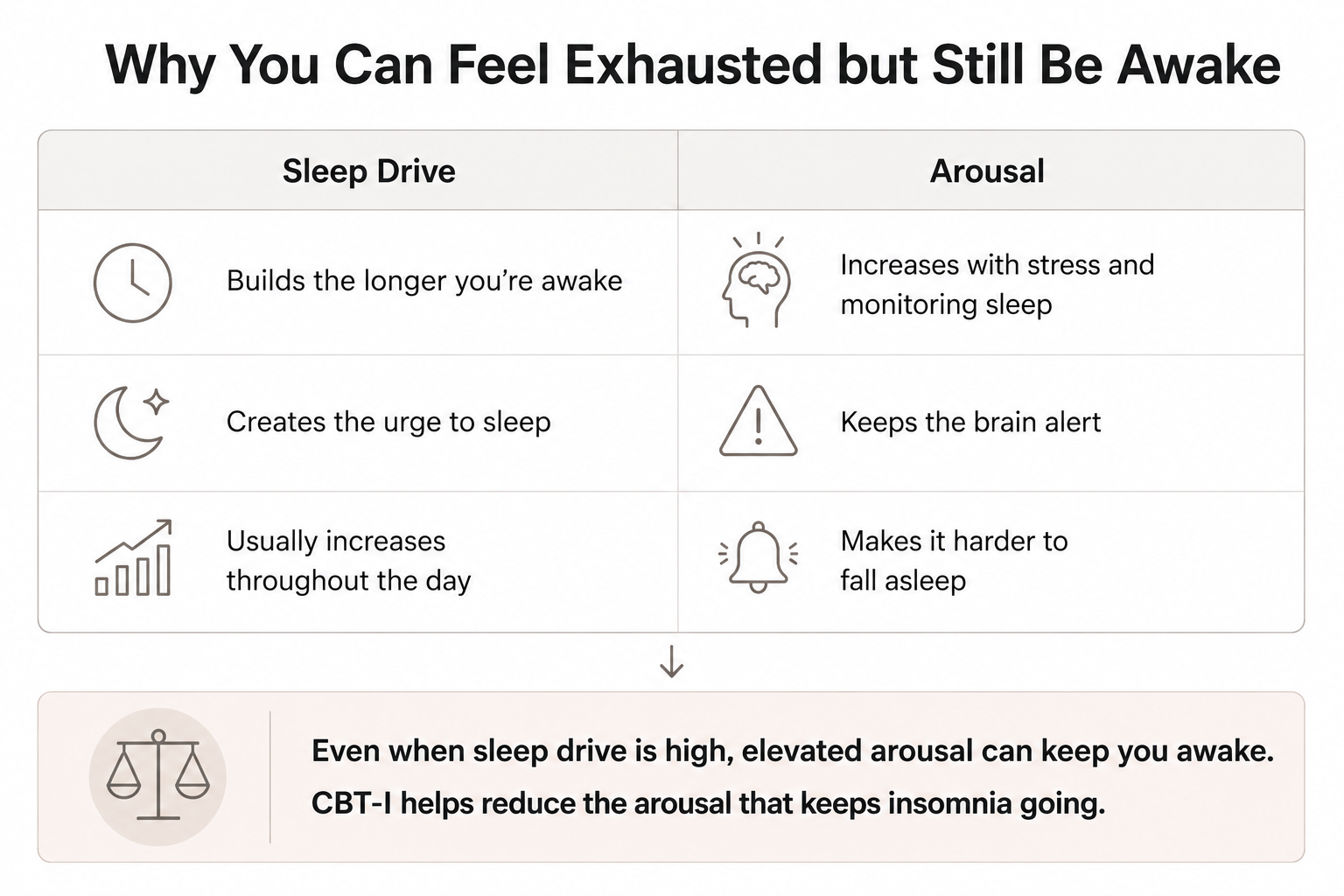
One important factor is sleep drive, sometimes called sleep pressure. Sleep drive gradually builds throughout the day and helps create the feeling of sleepiness that develops after many hours of wakefulness.
Another factor is arousal.
When the brain is highly alert, vigilant, frustrated, anxious, or focused on sleep itself, it can interfere with the ability to fall asleep even when someone is extremely tired.
That’s why a person can feel exhausted and awake at the same time.
Insomnia Often Becomes a Problem of Wakefulness
Many people assume insomnia occurs because the body has forgotten how to sleep. More often, the problem is that the brain has become too good at staying awake.
After weeks or months of struggling with sleep, people often begin monitoring their sleep closely, worrying about the consequences of poor sleep, checking the clock, trying harder to sleep, and becoming increasingly focused on whether they are awake or asleep.
These reactions make sense. But unfortunately, they can also increase alertness at the exact time the brain needs to disengage.
Over time, bed itself can become associated with effort, frustration, monitoring, and wakefulness rather than sleep.
The More You Try to Sleep, the Harder It Can Become
Sleep is unusual because it doesn’t respond well to effort. Most activities improve when we try harder. Sleep is the opposite.
People with insomnia frequently find themselves trying to force sleep, checking whether they feel sleepy, monitoring bodily sensations, calculating how much sleep they might get, worrying about the next day, and evaluating whether they’re falling asleep quickly enough.
The harder someone works to make sleep happen, the more attention often becomes focused on the fact that sleep hasn’t happened yet.
That attention increases alertness rather than decrease it.
Anxiety About Sleep Can Become Part of the Problem
Many people with chronic insomnia develop understandable anxiety about sleep itself.
After enough difficult nights, bedtime can begin to feel like a test.
Thoughts such as What if I can’t sleep tonight?, What if tomorrow is ruined?, or What if I never sleep again? can activate the body’s threat system.can activate the body’s threat system. The problem isn’t that these thoughts are irrational. The problem is that anxiety and sleep work against one another.
The brain cannot easily move into sleep mode while simultaneously preparing for danger.
Why Naps and Extra Time in Bed Backfire
When people are exhausted, it’s natural to try to compensate. They may sleep later, spend extra time in bed, cancel activities, or nap whenever possible.
Although these strategies can feel logical, they reduce the body’s sleep drive and make nighttime sleep more difficult. This is one reason many people are surprised to learn that spending more time in bed doesn’t always lead to more sleep.
Exhaustion Doesn’t Mean Something Is Wrong With Your Ability to Sleep
One of the most frightening aspects of insomnia is the feeling that the body has stopped knowing how to sleep. In reality, chronic insomnia is often maintained by patterns of hyperarousal, sleep-related anxiety, inconsistent sleep habits, and efforts to control sleep.
The ability to sleep is still there. The challenge is helping the brain return to conditions that allow sleep to occur more naturally.
How CBT-I Helps
Cognitive Behavioral Therapy for Insomnia (CBT-I) is designed to address the factors that maintain chronic insomnia.
Treatment involves:
reducing sleep-related anxiety
strengthening sleep drive
reducing behaviors that reinforce wakefulness
improving the connection between bed and sleep
Rather than trying to force sleep, CBT-I helps people create the conditions that make sleep more likely to occur.
The Goal Isn’t Perfect Sleep
Lots of people begin treatment hoping they’ll never have another bad night. But that’s not a realistic goal for anyone.Even good sleepers have difficult nights.
The goal of treatment is to reduce the struggle with sleep, improve consistency, and help people feel less trapped by insomnia. Over time, people find that sleep becomes less of a nightly battle and more of a natural process again.
CBT-I for Insomnia in Arlington, VA
I provide Cognitive Behavioral Therapy for Insomnia (CBT-I) in Arlington for adults experiencing chronic insomnia, difficulty falling asleep, nighttime awakenings, sleep anxiety, and related concerns. Services are available in person and through teletherapy.
Treatment focuses on helping people break out of chronic insomnia patterns, reduce anxiety around sleep, and build healthier, more sustainable sleep habits over time.
If sleep difficulties are affecting your daily life, contact me to learn more about treatment options.
Related Articles
What Is CBT-I (Cognitive Behavioral Therapy for Insomnia)?
Why CBT-I Often Produces More Lasting Improvement Than Sleep Medication