
Can You Take Sleep Medication While Doing CBT-I?
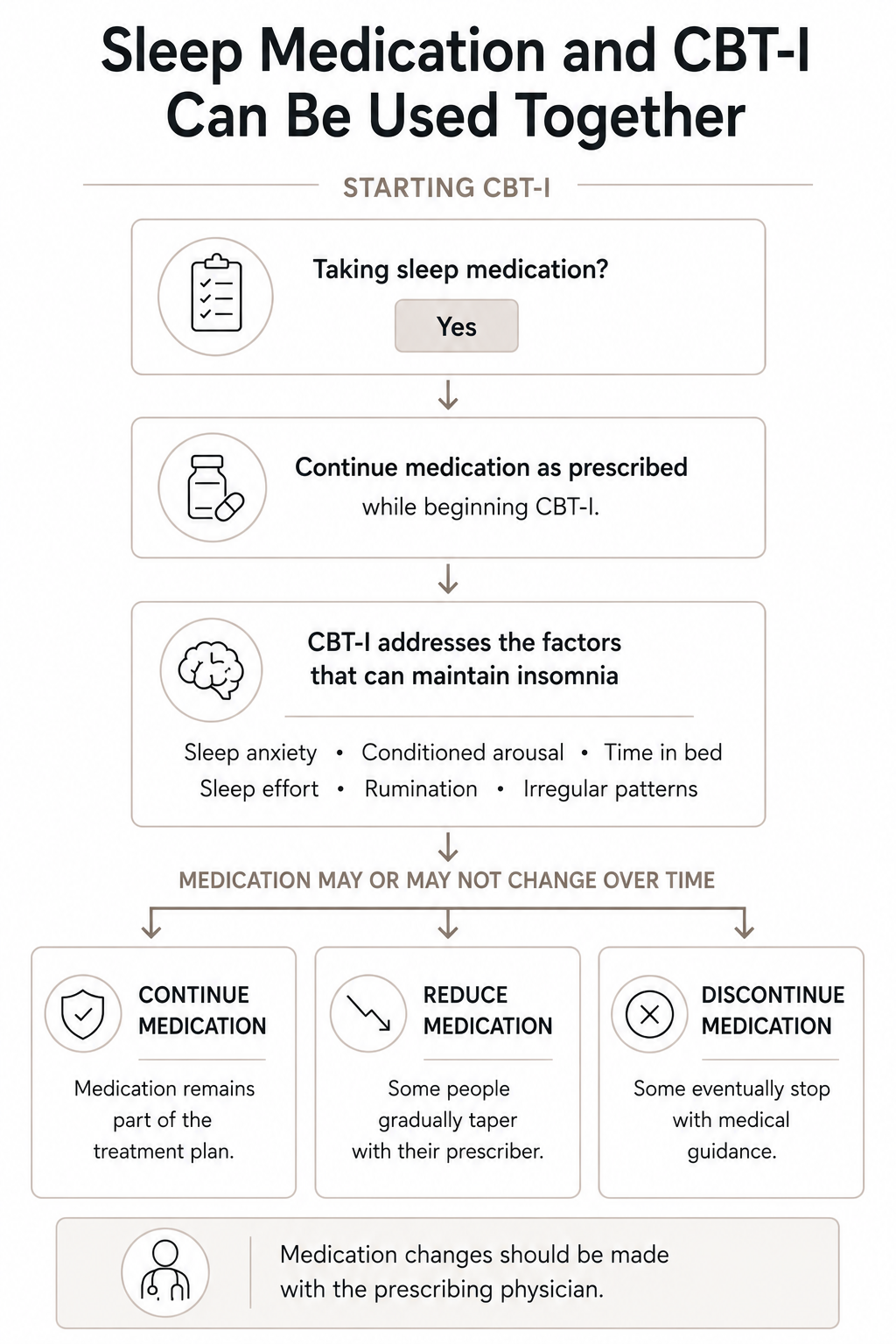
Yes. Many people continue taking sleep medication while participating in CBT-I, or Cognitive Behavioral Therapy for Insomnia.
One common misconception is that people must stop all sleep medication before beginning CBT-I. In reality, many people start treatment while taking prescription sleep medication, over-the-counter sleep aids, melatonin, or other sleep-related substances.
Whether medication changes are appropriate depends on the individual situation and should be discussed with the prescribing physician.
What Is CBT-I?
CBT-I is an evidence-based treatment for chronic insomnia. Rather than relying primarily on medication to create sleep, CBT-I targets the patterns that often keep insomnia going, such as conditioned wakefulness, sleep-related anxiety, excessive time in bed, irregular sleep patterns, nighttime rumination, and frustration around sleep.
CBT-I is considered a first-line treatment for chronic insomnia and has strong research support.
You Don’t Have to Stop Medication Before Starting CBT-I
Many people worry they’ll be told to stop medication immediately. That fear is understandable, especially if they’ve relied on medication for years, had severe insomnia in the past, or feel afraid they can’t sleep without it.
That’s not how Cognitive Behavioral Therapy for Insomnia works.
Treatment often begins while someone is still taking sleep medication. Some people later decide, in consultation with their physician, to reduce medication gradually. Others continue medication while still benefiting from CBT-I.
Medication Changes Should Be Handled Carefully
Many sleep medications shouldn’t be stopped abruptly without medical guidance.
Depending on the medication, sudden discontinuation can lead to:
rebound insomnia
increased anxiety
withdrawal symptoms
disrupted sleep patterns
in some cases, more serious medical complications
For that reason, decisions about reducing or discontinuing sleep medication should generally be made in consultation with the prescribing physician or psychiatrist.
When Medication Becomes Part of the Anxiety Cycle
Sleep medication isn’t inherently harmful. However, some people develop intense fear around the possibility of sleeping without it. Medication sometimes becomes psychologically linked to safety, control, or the ability to sleep at all.
A person may begin monitoring whether the medication will “work,” panicking if they forget it, or feeling unable to tolerate even one difficult night without it.
When that happens, CBT-I can help rebuild confidence in the body’s ability to sleep while reducing the fear and monitoring that often keep insomnia going.
Cognitive Behavioral Therapy for Insomnia Isn’t Anti-Medication
CBT-I isn’t about proving someone can sleep “naturally” at all costs.
The goal is more functional, sustainable sleep and a healthier relationship with sleep. For some people, that may eventually include tapering medication. For others, medication may remain part of a broader treatment plan.
Why Medication Alone May Not Solve Chronic Insomnia
Sleep medication can help some people, but chronic insomnia is often maintained by more than difficulty becoming sedated.
Many people continue struggling with:
fear of wakefulness
conditioned arousal in bed
excessive effort around sleep
catastrophic thinking about sleep loss
irregular sleep patterns
hypervigilance
CBT-I directly targets these maintaining factors.
CBT-I for Insomnia in Arlington, VA
I provide Cognitive Behavioral Therapy for Insomnia in Arlington for adults struggling with chronic insomnia, sleep anxiety, nighttime rumination, hypervigilance, and difficulty sleeping with or without medication. Services are available in person and through teletherapy.
Treatment focuses on helping people step out of cycles of frustration, anxiety, and excessive effort around sleep while rebuilding more consistent and sustainable sleep patterns over time.
Struggling with insomnia and aren’t sure what to do next? Let’s talk.
Related Articles
What Is CBT-I (Cognitive Behavioral Therapy for Insomnia)?
Why CBT-I Often Produces More Lasting Improvement Than Sleep Medication
Why Sleep Hygiene Alone Sometimes Isn’t Enough