
What Is Cognitive Behavioral Therapy (CBT)?
Cognitive Behavioral Therapy (CBT) is a structured, evidence-based form of psychotherapy commonly used to treat anxiety disorders, depression, obsessive-compulsive disorder (OCD), insomnia, stress-related difficulties, and many other mental health concerns.
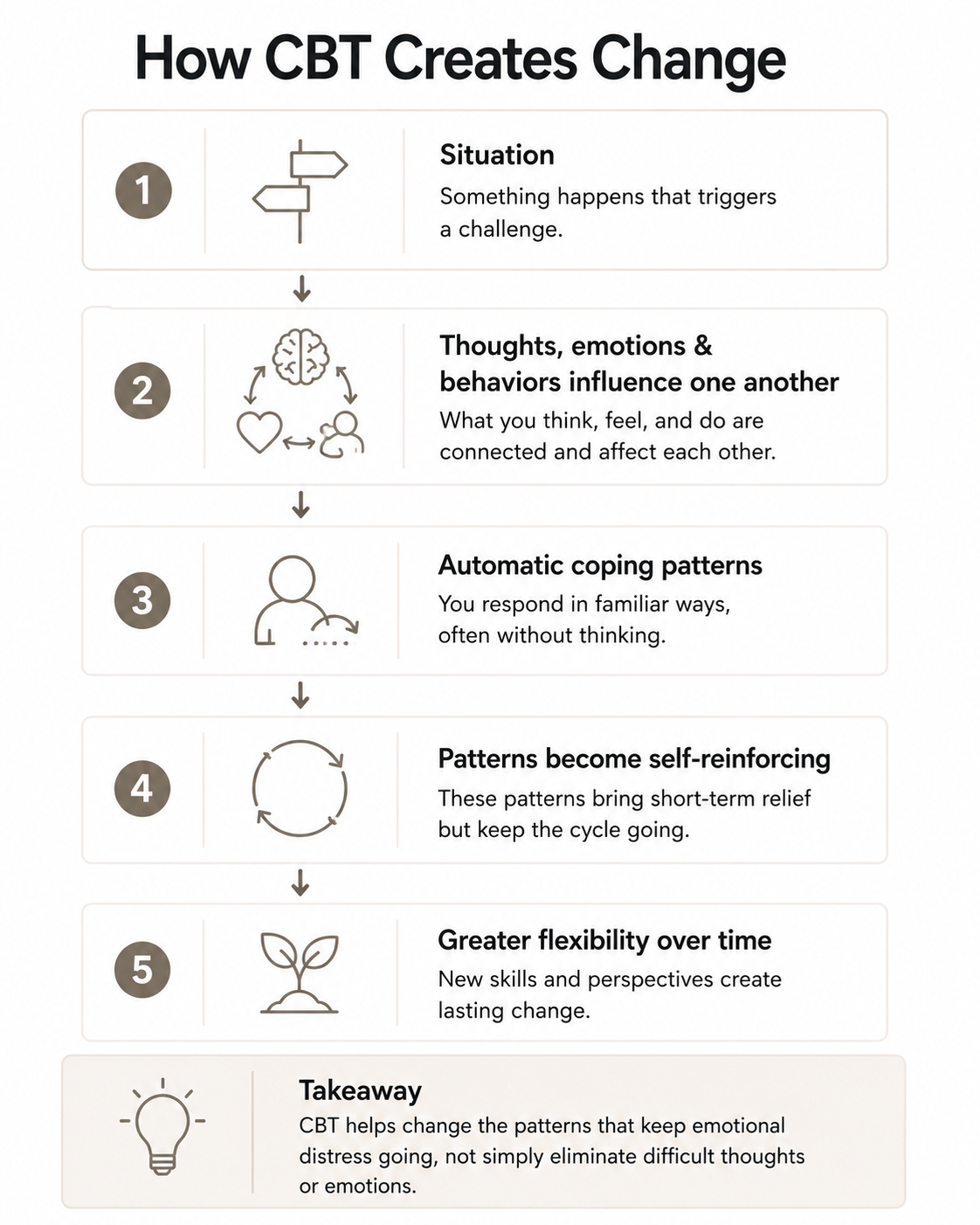
CBT is based on the idea that thoughts, emotions, behaviors, and physical reactions influence one another. Over time, certain patterns can unintentionally reinforce distress and make problems such as anxiety, depression, OCD, and insomnia more difficult to overcome.
Treatment focuses on identifying and changing the patterns that may be maintaining emotional difficulties over time.
CBT Is More Than “Positive Thinking”
One common misconception is that CBT simply teaches people to “think positively.”
In reality, CBT is much more nuanced than that.
CBT often focuses on helping people identify unhelpful thinking patterns, respond differently to distressing thoughts, reduce avoidance behaviors, improve coping strategies, build healthier behavioral patterns, overcome insomnia, and develop greater flexibility in responding to emotions and uncertainty. Many forms of CBT also place a strong emphasis on behavior rather than thoughts alone.
Many forms of CBT also focus heavily on behavior rather than only thoughts.
CBT Focuses on the Patterns That Keep Problems Going
People experiencing anxiety, depression, OCD, or insomnia often become trapped in patterns that unintentionally reinforce emotional distress over time.
For example, avoiding feared situations may temporarily reduce anxiety while strengthening fear over time, reassurance-seeking may briefly reduce uncertainty while reinforcing doubt, withdrawing from activities during depression may deepen isolation, and spending excessive time awake in bed may strengthen conditioned arousal and insomnia.
CBT often focuses on identifying these patterns and gradually changing them over time.
CBT Is Usually Goal-Oriented and Active
Compared to some other forms of therapy, CBT is often more structured and collaborative.
Treatment may involve identifying patterns outside of sessions, practicing new coping strategies, completing behavioral exercises, engaging in exposure-based work when appropriate, learning new ways of responding to difficult thoughts and emotions, and gradually approaching situations that anxiety or avoidance have made difficult.
The exact approach varies depending on the individual and the concerns being treated.
CBT Can Be Adapted for Different Problems
CBT isn’t a single rigid technique. Many specialized evidence-based treatments are rooted in CBT principles.
Different CBT approaches have been developed for different concerns. For example, Exposure and Response Prevention (ERP) is commonly used for OCD, Cognitive Behavioral Therapy for Insomnia is used for chronic insomnia, behavioral activation is often used for depression, exposure-based approaches are commonly used for anxiety disorders and panic, and specialized forms of CBT can also help people reduce the distress and life disruption associated with chronic tinnitus.
Different CBT approaches emphasize different strategies depending on the problem being addressed.
CBT Doesn’t Eliminate All Difficult Emotions
The goal of CBT isn’t to eliminate all anxiety, sadness, uncertainty, or discomfort.
Instead, treatment focuses on helping people respond more flexibly to difficult thoughts and emotions, reduce patterns that maintain distress, increase functioning despite discomfort, build confidence handling uncertainty and stress, and re-engage with meaningful activities and relationships.
Over time, many people find that emotional distress becomes less consuming when they stop organizing their lives around avoidance, compulsions, hypervigilance, or self-defeating patterns.
CBT Therapy in Arlington, VA
I provide Cognitive Behavioral Therapy (CBT) in Arlington, VA for adolescents and adults experiencing anxiety disorders, OCD, insomnia, depression, intrusive thoughts, stress, and related concerns. Services are available in person and through teletherapy.
Treatment focuses on helping people better understand the patterns contributing to distress while developing healthier and more sustainable ways of responding to difficult thoughts, emotions, and situations over time.
Curious if Cognitive Behavioral Therapy is a good fit for you? I’d be happy to discuss it with you.
Related Articles
What Is Exposure and Response Prevention (ERP) Therapy?
What Is CBT-I (Cognitive Behavioral Therapy for Insomnia)?
Understanding Tinnitus: Why It Happens and Why It Becomes So Distressing