
The Role of Psychoeducational Testing in Understanding ADHD
Many people think attention-deficit/hyperactivity disorder evaluations simply determine whether someone is distracted enough to qualify for a diagnosis.
In reality, understanding ADHD is often much more nuanced than that.
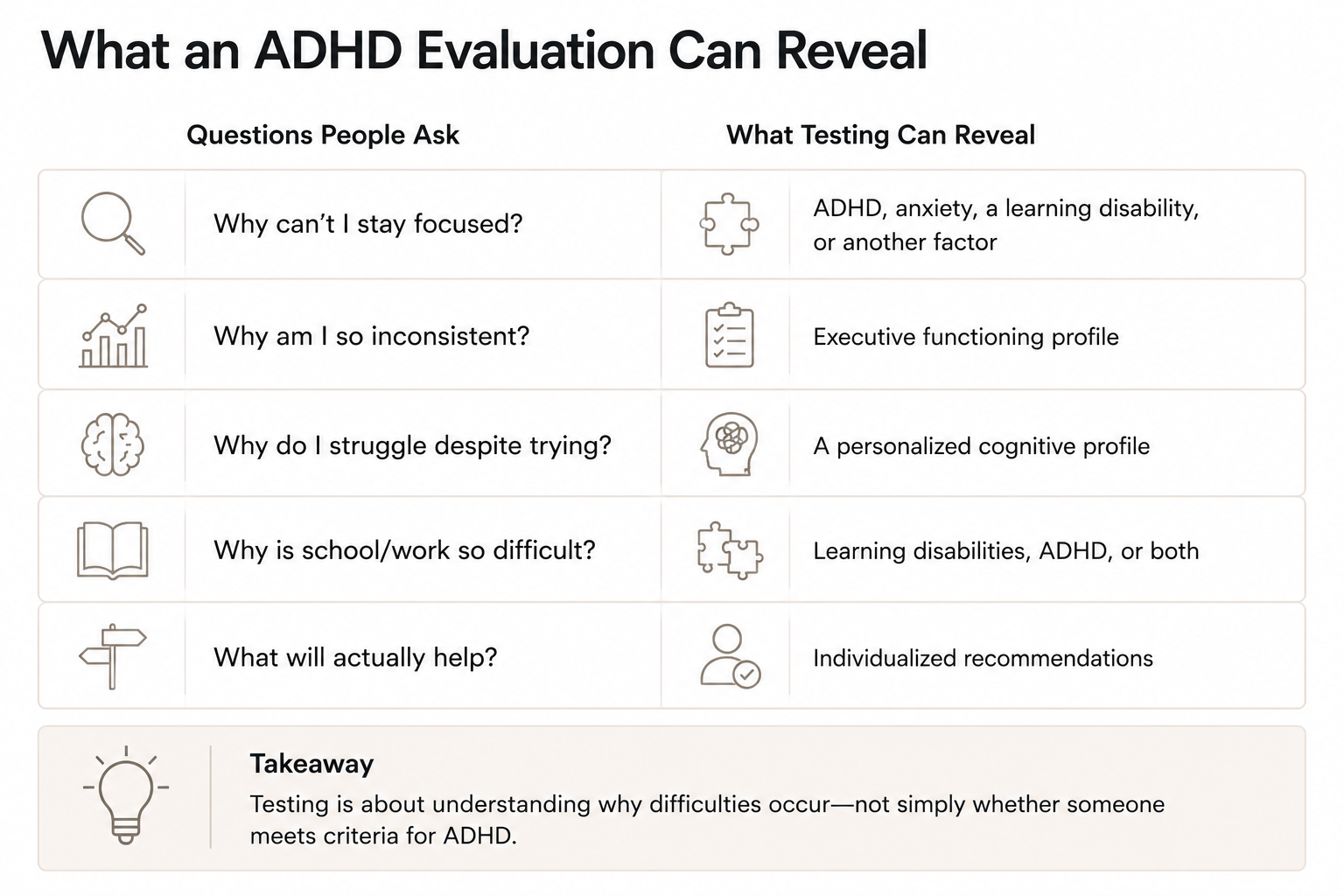
Attention difficulties can develop for many different reasons, including ADHD, anxiety, learning disabilities, sleep problems, depression, chronic stress, or executive functioning weaknesses. Because many conditions can affect concentration, productivity, and organization, understanding why someone is struggling is often just as important as identifying the symptoms themselves.
Psychoeducational testing can help provide that clarity.
ADHD Is More Than Difficulty Paying Attention
Although ADHD is commonly associated with distractibility or hyperactivity, ADHD often affects a much broader set of skills related to self-management and executive functioning.
People with ADHD may struggle with:
task initiation
organization
time management
working memory
planning and prioritization
sustaining effort on less interesting tasks
emotional regulation
maintaining consistency across settings
Many people with ADHD are capable, intelligent, and highly motivated. However, they may find themselves repeatedly running into difficulties with follow-through, productivity, deadlines, or managing everyday responsibilities.
Why ADHD Can Be Difficult to Identify
ADHD doesn’t always present in obvious ways.
Some individuals show clear signs of hyperactivity and impulsivity. Others primarily struggle with forgetfulness, procrastination, disorganization, or chronic overwhelm.
Many people develop strategies that help them compensate for years. Some rely on intelligence, perfectionism, or working longer hours than their peers. Others perform well in structured environments but struggle significantly when expectations become more independent.
ADHD can also look similar to several other conditions, including:
depression
sleep-related difficulties
Because symptoms often overlap, it isn’t always possible to determine the underlying cause based on observation or questionnaires alone.
What Psychological Testing Can Clarify
A comprehensive ADHD evaluation looks beyond surfacesymptoms to better understand how a person learns, thinks, attends, and manages information.
Testing may examine:
attention and concentration
executive functioning
working memory
processing speed
cognitive abilities
academic skills
emotional and behavioral functioning
The goal isn’t simply to determine whether ADHD is present. It is also to identify other factors that may be contributing to difficulties and to understand how different strengths and weaknesses interact.
For example, testing may reveal:
strong reasoning abilities alongside weak processing speed
learning disabilities contributing to academic struggles
executive functioning weaknesses affecting productivity and organization
These kinds of patterns often help explain why someone may appear highly capable in some situations while struggling significantly in others.
Testing Is About More Than a Diagnosis
One of the most valuable aspects of psychological testing is that it provides a more complete understanding of how a person functions.
A diagnosis can be helpful, but it is often only one part of the picture.
Equally important is understanding:
strengths that can be leveraged
areas of vulnerability
factors contributing to current difficulties
recommendations that are tailored to the individual
This information can help guide treatment, accommodations, educational planning, and support strategies moving forward.
How Testing Guides Support and Intervention
Accurate assessment helps ensure that recommendations are matched to the person’s specific needs.
Depending on the findings, recommendations may include:
executive functioning strategies
specialized instruction
workplace accommodations
therapy
coaching
consultation regarding medication
The goal is to move beyond guesswork and provide a clearer roadmap for success at school, work, and in daily life.
ADHD Evaluations in Arlington, VA
I provide comprehensive ADHD evaluations in Arlington, VA for children, adolescents, and adults experiencing attention difficulties, executive functioning challenges, academic struggles, chronic procrastination, and related concerns.
Evaluations are designed not only to identify ADHD when appropriate, but also to provide a nuanced understanding of how cognitive, attentional, emotional, and behavioral factors may be interacting, with the goal of helping individuals better understand their strengths, challenges, and treatment needs.
If you’re wondering whether testing might provide answers, I’d be happy to discuss your concerns and whether an evaluation may be helpful.
Related Articles
Understanding Psychological and Psychoeducational Testing
What is Executive Functioning?
My Child Gets Good Grades. Could They Still Have ADHD?
What Psychoeducational Testing Can Clarify About Learning and Attention
Symptoms of Adult ADHD Often Look Different Than People Expect