
Health OCD: When the Fear of Illness Becomes Obsessive
If you’ve ever found yourself spiraling after noticing a new symptom, repeatedly searching online for answers, or struggling to shake the feeling that something might be seriously wrong, you’re not alone. Health OCD can be exhausting and frightening, especially when the worry feels impossible to turn off.
Most people feel concerned when they notice a new symptom, receive unexpected medical news, or experience changes in their health.
Health OCD is different.
People with health OCD often become intensely focused on the possibility that they have, or might develop, a serious illness. This fear can persist even after medical evaluations suggest that a serious condition is unlikely. These concerns aren’t imagined or intentionally exaggerated. The fear and distress associated with them can consume a significant amount of time, attention, and emotional energy.
Health OCD involves ongoing worry about health, illness, bodily sensations, or medical conditions. People may find themselves paying close attention to symptoms, medical information, family health history, and changes in how their body feels.
Common worries include:
What if it’s cancer?
What if the doctor missed something?
What if this is a sign of a serious disease?
What if I don’t catch it in time?
What if the test results were wrong?
These fears feel urgent, overwhelming, and impossible to set aside.
People sometimes use the term “health OCD” to describe obsessive-compulsive disorder centered on fears of illness, disease, or physical symptoms. Although Illness Anxiety Disorder is a separate diagnosis, the two conditions often look similar and share many of the same maintaining processes, including reassurance-seeking, checking, hypervigilance, and difficulty tolerating uncertainty.
Like other forms of OCD, health OCD often attaches itself to something a person cares deeply about, in this case, health. Learn more in Types of OCD: Understanding Different OCD Themes.
Normal Symptoms Can Feel Dangerous
One of the most challenging aspects of health OCD is that our bodies naturally produce sensations all the time. Everyone experiences headaches, muscle tension, dizziness, stomach discomfort, fatigue, changes in heart rate, tingling, and random aches. In most cases, these sensations are harmless and temporary.
For someone with health OCD, however, normal bodily experiences feel like evidence that something is seriously wrong. A headache may be interpreted as a brain tumor. A skipped heartbeat may feel like proof of heart disease. A stomach sensation may trigger fears of a serious illness.
When anxiety is high, the mind can quickly jump from a symptom to the worst-case scenario.
Anxiety Can Create Physical Symptoms
Anxiety itself can also cause physical symptoms such as nausea, dizziness, stomach discomfort, muscle tension, headaches, a faster heart rate, chest tightness, and fatigue.
Because these sensations can closely resemble symptoms of illness, it’s understandable that they may be mistaken for signs that something is seriously wrong.
Reassurance-Seeking and Hypervigilance Can Keep the Cycle Going
Many people with health OCD look for reassurance through medical appointments, internet searches, asking loved ones for reassurance, checking symptoms, or pursuing additional testing.
These behaviors often provide temporary relief, which can feel reassuring in the moment. Unfortunately, the anxiety frequently returns. Common thoughts include:
But what if they missed something?
What if my case is different?
What if it’s too early to detect?
What if I should get a second opinion?
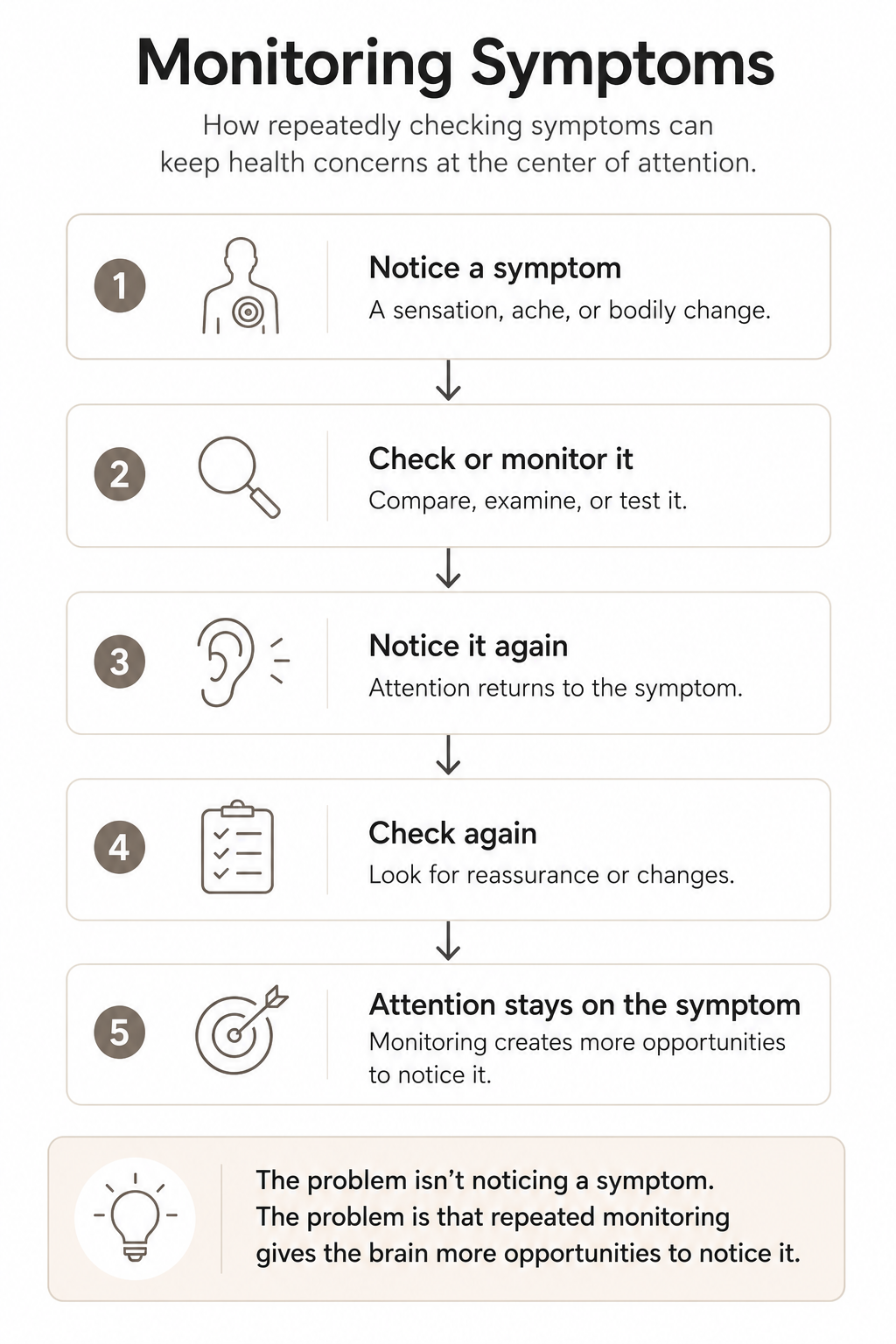
At the same time, closely monitoring the body makes normal sensations easier to notice and harder to ignore. As a result, reassurance-seeking and hypervigilance can unintentionally strengthen the search for certainty, even though complete certainty is rarely possible.
Health OCD and Illness Anxiety Disorder
Health OCD and illness anxiety disorder are distinct diagnoses, but they can look remarkably similar. Both may involve intrusive fears about illness, repeated checking, reassurance-seeking, compulsive internet research, hypervigilance, and difficulty tolerating uncertainty.
Because the treatments overlap considerably, distinguishing between the two isn’t always the most important first step. A thorough assessment can help clarify which diagnosis best explains a person’s symptoms and guide treatment accordingly.
Treatment for Health OCD
Treatment focuses on changing how a person responds to fear, uncertainty, and bodily sensations. Therapy may involve reducing checking and reassurance-seeking, challenging catastrophic interpretations, increasing tolerance for uncertainty, and gradually decreasing avoidance behaviors.
Many people find that as they spend less time monitoring symptoms, researching illnesses, and searching for certainty, health concerns begin to take up less space in their lives.
Recovery Doesn’t Mean Ignoring Your Health
Some people worry that treatment will ask them to ignore all of their symptoms, avoid medical care, or pretend health concerns don’t matter. It doesn’t. Appropriate medical evaluation remains important.
The challenge is learning to distinguish between reasonable attention to health concerns and anxiety-driven checking, reassurance-seeking, symptom monitoring, and online research.
Recovery doesn’t mean eliminating all concern about illness or medical problems. Everyone worries about their health from time to time. Instead, recovery often involves spending less time focused on symptoms, seeking less reassurance, tolerating uncertainty more effectively, and feeling more confident in your ability to respond appropriately when genuine health concerns arise.
The goal isn’t to stop caring about your health. The goal is to help health concerns take their appropriate place in your life, rather than organizing life around the constant need for certainty.
Therapy for Health OCD and Health Anxiety in Arlington, VA
I provide therapy in Arlington for anxiety disorders, health OCD, health anxiety, OCD, and related concerns. Services are available in person and through teletherapy. Treatment focuses on helping people step out of cycles of fear, checking, reassurance-seeking, and hypervigilance while building greater flexibility, confidence, and resilience over time.
If you’re ready to get started, reach out to schedule a consultation.
Related Articles
Types of OCD: Understanding Different OCD Themes
What Is Exposure and Response Prevention (ERP) Therapy?