
My Child Refuses Therapy. Can SPACE Still Help?
One of the most frustrating situations parents face is knowing their child needs help but refuses to participate in therapy.
Some children refuse to attend appointments altogether. Others attend but refuse to talk, engage minimally, or make it clear they don’t want to be there.
Parents often find themselves wondering:
Should I force my child to go?
Do we need to wait until they’re ready?
Is there anything I can do in the meantime?
These are common questions, and they’re one reason many families become interested in SPACE treatment.
Traditional Therapy Isn’t the Only Option
When a child is struggling with anxiety, OCD, avoidance, or emotional distress, many parents assume treatment can only work if the child is actively participating.
While individual therapy can be very helpful, it’s not the only path forward.
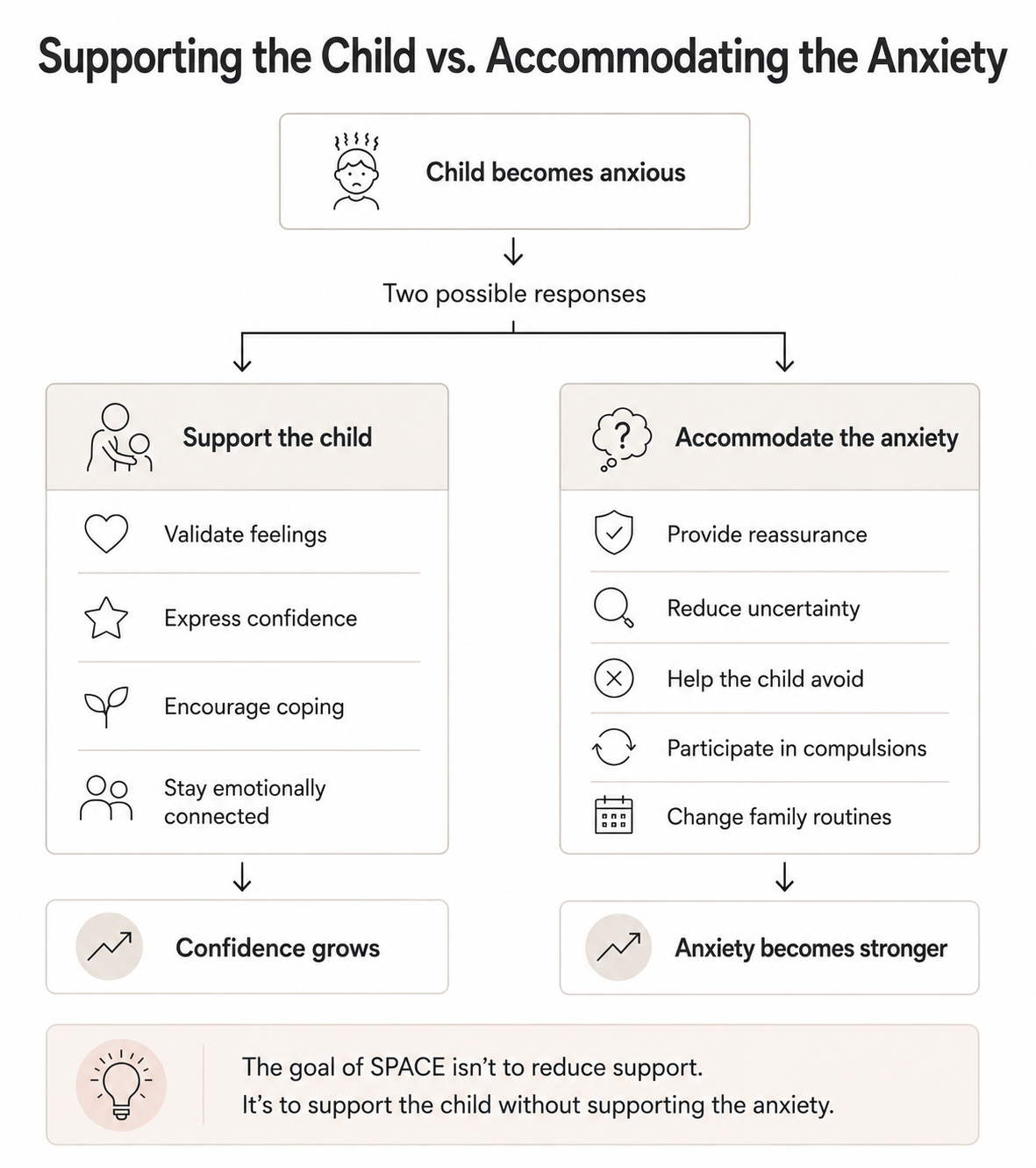
SPACE (Supportive Parenting for Anxious Childhood Emotions) is an evidence-based treatment that works through parents rather than through the child. Instead of focusing on changing the child’s behavior directly, SPACE helps parents change patterns that may be unintentionally reinforcing anxiety and avoidance.
Why Children Resist Therapy
Children refuse therapy for many different reasons.
Some feel embarrassed or self-conscious. Others worry they will be judged, pressured, or forced to talk about things they don’t want to discuss. Some children don’t believe they have a problem. Others recognize they are struggling but feel overwhelmed by the idea of treatment. In some cases, avoidance itself is part of the problem. Anxiety often pushes people away from the very situations that might help them feel better.
Whatever the reason, resistance to therapy doesn’t mean a family is out of options.
How Parents Influence Anxiety Without Realizing It
When a child is struggling, parents naturally try to help.
They may:
modify routines
avoid situations that trigger distress
speak for their child
help them avoid uncomfortable situations
repeatedly solve problems for them
These responses come from love and concern.
The challenge is that some of these accommodations can unintentionally strengthen anxiety over time. A child may begin learning that anxiety is dangerous, unmanageable, or something that must always be avoided.
This is where SPACE focuses its attention.
How SPACE Works
In SPACE treatment, parents learn how to:
identify accommodations
respond more effectively to anxiety
communicate support without reinforcing avoidance
reduce accommodations gradually
encourage independence
tolerate their child’s distress without immediately trying to eliminate it
The goal isn’t to become less supportive.
The goal is to help children learn that they can handle discomfort, uncertainty, and anxiety without needing the world around them to constantly adjust.
As parents change their responses, children often begin changing as well.
Why This Approach Can Be So Helpful
One of the most empowering aspects of SPACE is that parents don’t have to wait for a child to become motivated for treatment before taking action. Parents have influence whether a child attends therapy or not. By changing how they respond to anxiety and avoidance, parents can begin shifting patterns that may have been maintaining difficulties for months or even years.
Does This Mean My Child Should Never Attend Therapy?
Not at all. Many children who initially refuse therapy eventually become more willing to participate. In some situations, individual therapy remains an important part of treatment. SPACE simply recognizes that parents aren’t powerless while waiting for that to happen.
When SPACE May Be Worth Considering
SPACE may be a good fit if:
your child refuses therapy
your teen is resistant to treatment
anxiety is affecting the entire family
reassurance-seeking has become excessive
avoidance is growing over time
family accommodations have become difficult to manage
you feel stuck between helping and enabling
SPACE Treatment in Arlington, VA
I provide SPACE treatment for families dealing with anxiety, OCD, avoidance, reassurance-seeking, and related concerns in Arlington, VA. Services are available in person and through teletherapy. Treatment focuses on helping parents make changes that reduce patterns reinforcing anxiety and avoidance while strengthening confidence, flexibility, and independence over time.
Related Articles
How Reassurance Can Reinforce Anxiety and OCD in Children
10 Signs Anxiety Is Running Your Family Instead of Your Family Running Anxiety