
Understanding Moral Scrupulosity: When OCD Targets Morality and Responsibility
Have you ever replayed a conversation for hours, wondering whether you lied, hurt someone’s feelings, or acted selfishly?
Maybe you apologized repeatedly, confessed something minor, or couldn’t stop asking yourself whether you were actually a good person.
Most people experience guilt from time to time. With moral scrupulosity, however, those doubts become obsessive and almost impossible to resolve.
Individuals with moral scrupulosity may become consumed by questions such as:
What if I’m actually a bad person?
What if I hurt someone emotionally?
What if I was manipulative without realizing it?
What if I acted selfishly?
What if I’m morally failing somehow?
What if I’m responsible for harm I didn’t notice?
These fears can become relentless and emotionally exhausting.
What Is Moral Scrupulosity?
Moral scrupulosity is a form of obsessive-compulsive disorder in which obsessions center around morality, ethics, responsibility, guilt, honesty, or fear of being a “bad” person.
Unlike religious scrupulosity, moral scrupulosity may or may not involve religion. The central issue is usually an overwhelming need for certainty about one’s moral character, intentions, or responsibility. People often become trapped in cycles of guilt, rumination, confession, reassurance-seeking, mental reviewing, over-analysis, compulsive apologizing, checking intentions, and fear of causing harm.
Moral scrupulosity is one of many OCD themes. Although the obsessions focus on ethics and doing the right thing, obsessive compulsive disorder can also center on harm, contamination, relationships, health, or many other topics. Learn more in Types of OCD: Understanding Different OCD Themes.
OCD Often Attacks What People Value Most
People with moral scrupulosity are often highly conscientious, empathetic, thoughtful, and ethically sensitive. Ironically, these qualities can become targets for OCD. The disorder tends to latch onto the possibility:
What if I’m secretly not who I think I am?
The person may begin treating normal human imperfection, ambiguity, or uncertainty as evidence of possible moral failure.
Common Obsessions in Moral Scrupulosity
Obsessions often involve fears of having misled someone, acted selfishly, harmed another person emotionally, withheld important information, made an unethical choice, or behaved in a way that reflects poorly on one’s character. Some people become preoccupied with whether their motives were pure enough, whether they disclosed everything they should have, or whether they feel an appropriate amount of guilt about a situation.
The person often becomes highly focused on their intentions, emotional reactions, moral certainty, whether they “really meant” something, and whether they handled situations perfectly.
Mental Reviewing and Rumination Are Common
Many compulsions in moral scrupulosity are invisible.
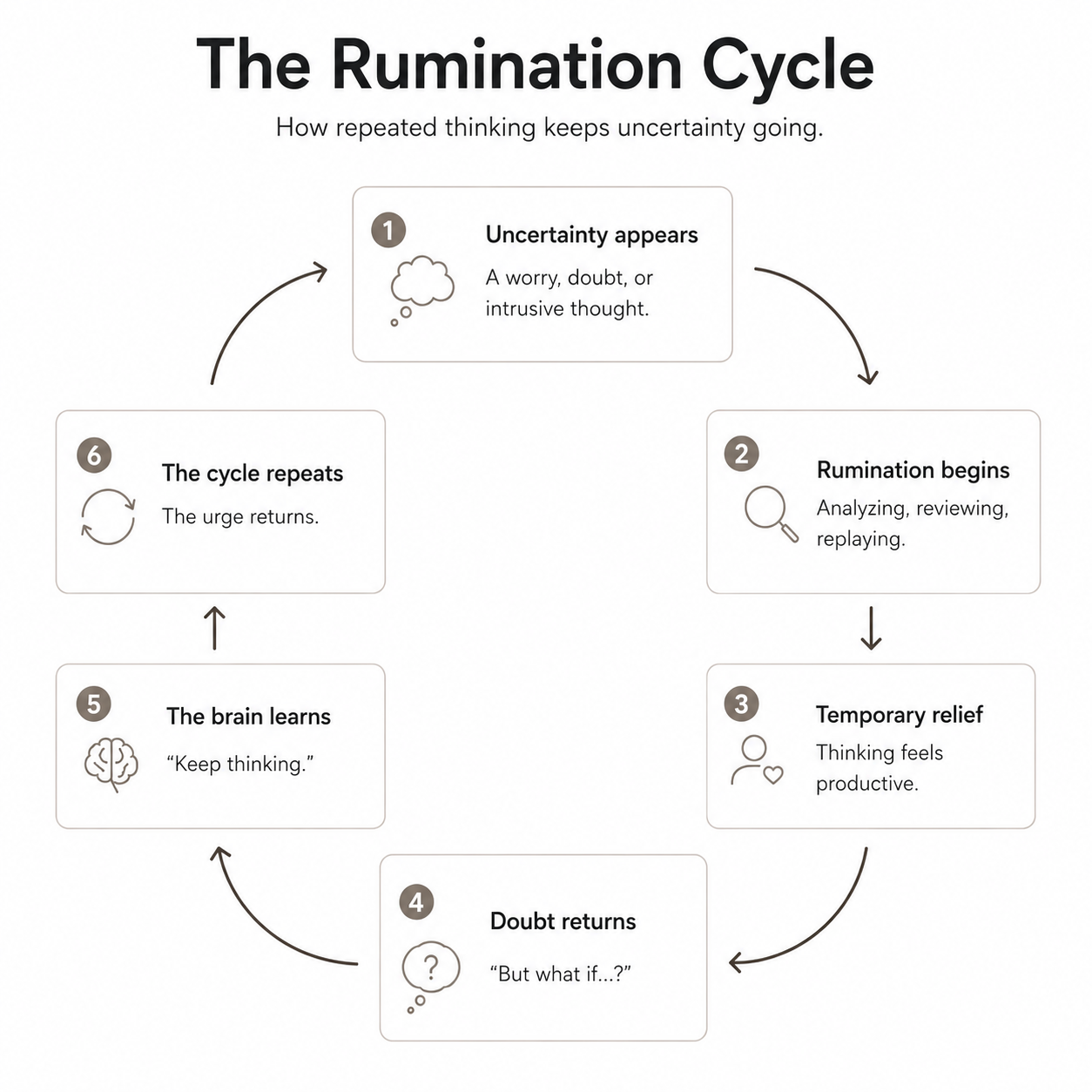
People may spend hours replaying conversations, analyzing decisions, reviewing intentions, mentally checking whether they were honest enough, trying to determine whether they acted immorally, and searching for certainty about what kind of person they are. This process often feels urgent and impossible to resolve fully.
OCD often responds with new doubts: What if I missed something? What if I’m rationalizing? What if other people would see this differently? What if I’m excusing bad behavior? The questions may change, but the search for certainty continues.
Reassurance-Seeking Can Become Compulsive
People with moral scrupulosity often seek reassurance from friends, partners, therapists, online forums, and family members.
People with moral scrupulosity often seek reassurance from friends, partners, therapists, family members, or online forums. They may ask whether they handled a situation appropriately, whether they were manipulative, whether they hurt someone, or whether they should confess something. Although reassurance may reduce anxiety temporarily, OCD often returns demanding more certainty.
Reassurance may reduce anxiety temporarily. But OCD returns demanding more certainty.
Confession and Over-Apologizing
Some individuals feel driven to confess thoughts repeatedly, disclose minor details excessively, apologize compulsively, seek absolution, or “clear the record.” The person may fear that withholding even small details is dishonest or morally dangerous. These compulsions often create temporary relief while strengthening OCD long-term.
Moral Scrupulosity Often Creates Impossible Standards
People with moral scrupulosity frequently hold themselves to rigid, perfectionistic, and often unrealistic standards that are impossible to sustain consistently. Normal human experiences such as uncertainty, mixed motives, emotional reactions, mistakes, conflict, and imperfect communication may become interpreted as signs of serious moral failure. The person may struggle to tolerate the reality that people can care deeply while still making mistakes, have mixed motives, act imperfectly without being immoral, and experience uncertainty without resolving it completely.
Shame Is Often Intense
Moral scrupulosity is often associated with significant shame.
Many people fear being exposed as a bad person, discovering that they lack integrity, or learning that they have harmed others without realizing it. Because these fears center on identity and character, the distress is often profound. Because the fears feel so personal and identity-based, the distress can become profound.
Treatment Isn’t About Becoming Less Moral
Many people worry that treatment means lowering their standards, becoming careless, excusing harmful behavior, or no longer caring about ethics. That’s not the goal.
Treatment focuses on reducing compulsive certainty-seeking, excessive guilt, rumination, reassurance-seeking, and perfectionistic moral checking while helping people tolerate uncertainty and imperfection more flexibly.
ERP for Moral Scrupulosity
Treatment often involves Exposure and Response Prevention (ERP), which helps people gradually reduce compulsions and tolerate uncertainty about morality, intentions, and responsibility.
Treatment may involve:
reducing reassurance-seeking and confession
resisting compulsive reviewing and moral analysis
tolerating uncertainty about intentions, responsibility, and guilt
ERP isn’t about encouraging unethical behavior. It’s about helping people stop organizing their lives around impossible demands for moral certainty and perfection.
OCD Treatment in Arlington, VA
I provide therapy for OCD and anxiety disorders in Arlington, including treatment for moral scrupulosity, intrusive thoughts, compulsive guilt, reassurance-seeking, rumination, and obsessive doubt. Services are available in person and through teletherapy.
Treatment focuses on helping people step out of compulsive cycles of fear, guilt, perfectionism, and certainty-seeking while developing a more flexible and sustainable relationship with uncertainty, responsibility, and self-evaluation over time.
Related Articles
Types of OCD: Understanding Different OCD Themes
What Is Exposure and Response Prevention (ERP) Therapy?